We're Hiring — Build Your Career With Polestar →



Kansas City Clay Soil Is Moving. Could It Be Damaging Your Sewer Line?



Kansas City homeowners are familiar with weather that can shift quickly from heavy rain to prolonged dry periods. Those moisture changes do more than affect lawns and foundations. They can also cause clay-heavy soil to expand, shrink, and move around underground plumbing.
A sewer line buried in shifting soil may experience pressure, uneven support, separated joints, or changes in slope. Damage is more likely when the pipe is already aging, corroded, poorly supported, or weakened by previous repairs.
In this guide, we will explain how Kansas City clay soil can affect sewer lines, which warning signs homeowners should watch for, and when professional inspection or repair may be needed.
Why Clay Soil Moves So Much
Clay soil contains very small particles that hold water.
When the ground becomes wet, clay can absorb moisture and expand. During dry conditions, it loses moisture and contracts. The soil may repeat this cycle many times as weather and drainage conditions change.
Movement may occur unevenly across a property. One part of a sewer line may remain supported while another area settles, lifts, or shifts sideways.
The amount of movement depends on several factors, including:
- Soil composition
- Drainage patterns
- Rainfall
- Drought conditions
- Irrigation
- Tree roots
- Grading
- Pipe depth
- Previous excavation
Clay soil does not automatically damage every buried pipe. Problems are more likely when movement places stress on a vulnerable sewer line.
How Kansas City Weather Can Affect the Ground
Kansas City weather can expose soil to repeated moisture changes.
Heavy rain may saturate the ground around a sewer line. Extended dry periods can then cause the same soil to shrink. Freezing and thawing may create additional movement near the surface, while poor yard drainage can keep some areas wetter than others.
A leaking water or sewer line may also affect the surrounding soil. Escaping water can soften or wash away the soil that supports the pipe, allowing part of the line to settle.
This means soil movement may damage a pipe, but pipe damage may also worsen soil instability. A professional inspection is often needed to determine which problem came first.
How Moving Soil Places Stress on Sewer Pipes
A sewer line depends on stable support and a consistent downward slope to carry wastewater away from the home.
Moving soil may:
- Push a pipe sideways
- Pull joints apart
- Place pressure on brittle pipe walls
- Cause part of the line to settle
- Change the drainage slope
- Create a low section
- Contribute to cracks
- Worsen existing corrosion
Flexible modern piping may tolerate some ground movement better than certain older materials, but no sewer line is protected from unlimited pressure or severe settlement.
The original installation also matters. A line installed on poorly compacted soil may shift more easily as the ground settles.
Sewer Problems Linked to Soil Movement
Soil movement can contribute to several types of sewer line damage.
Common problems include:
- Separated joints: Two pipe sections pull apart or move out of alignment.
- Cracks: Pressure or bending causes the pipe wall to split.
- Offset connections: One section shifts higher, lower, or sideways from the next.
- Bellied pipe: A low section develops and holds wastewater.
- Leaks: Wastewater escapes through cracks or damaged joints.
- Altered slope: The pipe no longer has the pitch needed for reliable flow.
- Partial collapse: A weakened section loses some of its shape.
- Complete collapse: The line can no longer carry wastewater through the damaged area.
These problems often begin with symptoms that resemble an ordinary drain clog.
Which Sewer Pipes May Be More Vulnerable?
The condition of the pipe matters more than age or material alone.
Older sewer lines may be more susceptible if they have:
- Deteriorated joints
- Corrosion
- Brittle walls
- Previous patch repairs
- Root intrusion
- Poor bedding or support
- Years of ground movement
Clay tile, cast iron, Orangeburg, and other older materials may develop different types of damage over time. However, not every older pipe is failing, and newer piping may still shift if it was installed incorrectly or the surrounding soil moves significantly.
A sewer camera inspection is the best way to evaluate the actual condition of the line.
Signs Your Sewer Line May Have Shifted
A shifted sewer line may not create an obvious problem immediately.
Warning signs can include:
- Recurring main drain clogs
- Multiple fixtures draining slowly
- Gurgling toilets
- Water rising in a tub after flushing
- Sewage odors
- Backups in lower-level drains
- Wet or unusually green areas in the yard
- Drainage problems that return after cleaning
- Standing water visible during a sewer inspection
- Increasingly frequent plumbing service calls
One slow sink usually indicates a local clog. Problems affecting several fixtures are more likely to involve the main drain or sewer line.
What Is a Bellied Sewer Line?
A sewer line belly is a low section of pipe where water and waste collect.
The line should normally maintain a steady slope toward the municipal sewer or septic connection. If part of the pipe settles, wastewater may pool instead of continuing to flow.
A belly may form because of:
- Soil settlement
- Poor installation
- Insufficient pipe support
- Ground movement
- Erosion around the line
- Heavy pressure above the pipe
Waste, grease, and paper can accumulate in the low area and create repeated blockages.
Drain cleaning may remove the immediate obstruction, but it cannot lift the pipe or restore the correct slope. A severe belly usually requires physical repair or replacement of the affected section.
Why Drain Cleaning May Only Provide Temporary Relief
Snaking, augering, or hydro jetting can remove waste from inside the sewer line.
These services may restore flow when the pipe contains:
- Grease
- Sludge
- Paper buildup
- Wipes
- Roots
- Other debris
However, cleaning cannot correct structural problems such as:
- A bellied pipe
- Separated joints
- Major offsets
- Cracks
- Collapse
- Improper slope
If the same blockage returns after professional cleaning, the pipe should be inspected rather than cleared repeatedly without further diagnosis.
How Soil Movement Can Lead to Root Intrusion
Tree roots usually enter sewer lines through an existing opening.
When soil movement separates a joint or cracks a pipe, moisture can escape into the surrounding ground. Nearby roots may grow toward that moisture and enter the line.
Once inside, roots can trap toilet paper and waste. Over time, they may form a dense blockage and place additional pressure on the damaged pipe.
Root removal may restore drainage, but the roots can return if the crack or joint remains open.
A long-term solution may require sealing, repairing, or replacing the damaged section.
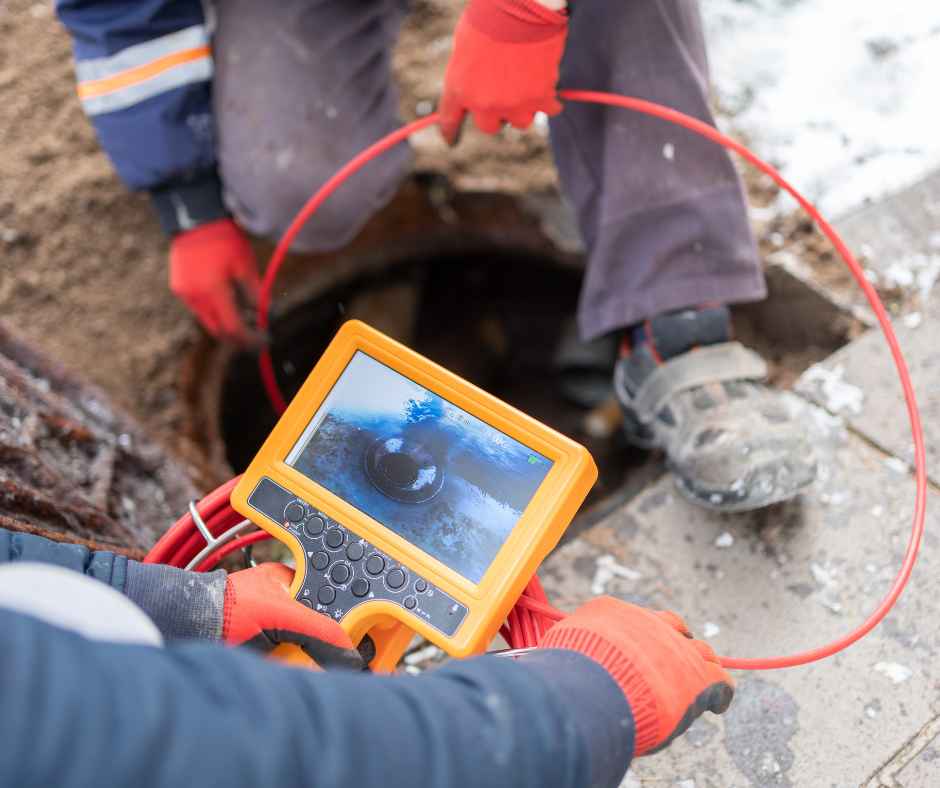
Why a Sewer Camera Inspection Is Important
A sewer camera allows a plumber to inspect the interior of the line.
The camera may reveal:
- Cracks
- Root intrusion
- Separated joints
- Offset connections
- Corrosion
- Standing water
- Bellied sections
- Partial collapse
- Previous repairs
- Heavy buildup
The camera can also help locate the damaged area so the repair plan is more precise.
However, a camera only shows the pipe interior. Additional locating or testing may be needed to determine the pipe depth, route, or exact relationship between the damaged section and conditions in the yard.
Can a Shifted Sewer Line Be Repaired Without Excavation?
Some damaged sewer lines may qualify for trenchless repair.
Pipe lining creates a new pipe inside the existing one. It may seal cracks, small gaps, leaking joints, and certain root entry points.
Pipe bursting replaces the old line by pulling a new pipe through its path while breaking the damaged pipe outward.
Trenchless repair may reduce disturbance to:
- Lawns
- Landscaping
- Driveways
- Walkways
- Patios
- Other finished surfaces
These methods have limitations. A liner follows the route and slope of the existing pipe, so it cannot correct a severe belly. Pipe bursting may not be appropriate when the route has shifted significantly or nearby utilities create access concerns.
When Traditional Excavation May Be Necessary
Excavation may be required when the sewer line has:
- A severe belly
- Major misalignment
- Complete collapse
- Missing sections
- An unusable route
- Improper slope
- Damage near a connection that must be rebuilt
Excavation gives the plumbing team direct access to the pipe and surrounding soil. The damaged section can be repositioned, supported, or replaced with the proper slope.
Although excavation may disturb more of the property, it can provide the most reliable correction when ground movement has physically changed the pipe’s route.
What Affects the Recommended Repair Method?
The best repair depends on more than the appearance of one crack.
A plumber may consider:
- Pipe material
- Pipe diameter
- Depth
- Length of damage
- Existing slope
- Soil conditions
- Access points
- Nearby utilities
- Landscaping
- Driveways or structures
- Foundation proximity
- Overall pipe condition
An isolated offset may require a spot repair. Widespread deterioration may justify replacing a longer section.
The recommendation should explain whether the repair addresses only the immediate damage or the broader condition of the sewer line.
Can Homeowners Prevent Soil-Related Sewer Damage?
Homeowners cannot control Kansas City soil composition or every weather change. They can avoid adding unnecessary stress around the sewer line.
Helpful steps include:
- Repairing plumbing leaks promptly
- Directing downspouts away from the foundation and sewer route
- Correcting persistent yard drainage problems
- Avoiding heavy vehicles over buried lines
- Planting large trees away from the sewer route when possible
- Responding to recurring clogs early
- Keeping sewer cleanouts accessible
- Scheduling a camera inspection when problems return
Consistent drainage around the property may help reduce extreme wet and dry differences, although it cannot prevent every form of soil movement.
What to Do When Several Drains Slow Down
Multiple slow drains can indicate that the main sewer line is becoming restricted.
Until the cause is identified:
- Reduce household water use
- Pause laundry and dishwasher cycles
- Avoid long showers
- Do not flush toilets unnecessarily
- Keep chemical drain cleaners out of the system
- Watch lower-level fixtures for backups
- Keep people and pets away from sewage
- Schedule professional service promptly
Continuing to use large amounts of water can turn a partial blockage into an indoor sewage backup.
Protect Your Kansas City Home From Sewer Line Damage
Expanding and contracting clay soil can place pressure on vulnerable sewer lines. Over time, movement may contribute to cracks, separated joints, low sections, leaks, or collapse.
Recurring clogs should not automatically be treated as routine buildup. If drainage problems return after cleaning, the line may need a closer inspection.
Polestar Plumbing, Heating & Cooling can perform sewer camera inspections, identify damaged or shifted pipe sections, and explain the available repair options. If your Kansas City home has multiple slow drains, repeated backups, or other signs of sewer trouble, contact us today to schedule professional service.
Let Us Guide You To Home Comfort
Plumbing, heating, or cooling trouble can disrupt your day fast. Polestar offers same-day service backed by 24/7 answering, so you can get the help your home needs when problems arise.